Skip to content


Table of Contents
A cracked tooth rarely tells you what it needs. One person feels a sharp twinge biting into a sandwich, another feels nothing for months, and both can end up with the same diagnosis. The confusion usually starts there: a crack is something you feel, and a root canal is something a dentist does, yet people discuss them as if they were one and the same.
They are not the same thing. At Endodontic Specialists by Solomon Dental, we see cracked teeth every week in Summerville, and the right treatment depends far less on how much the tooth hurts than on where the crack ends.
Does a cracked tooth always need a root canal?
No. A cracked tooth needs a root canal only when the crack reaches the pulp, which is the living tissue inside the tooth. Shallower cracks are often handled with bonding or a crown instead. An exam and imaging show how far the crack travels, and that is what decides the treatment.
Cracked Tooth vs Root Canal: What the Comparison Actually Is
The cracked tooth vs root canal question compares a diagnosis against one possible treatment for it. A cracked tooth is the condition. A root canal is one of several ways to address it, alongside bonding, a filling, a crown, and in the most advanced cases, extraction.
Three factors determine which path a tooth takes: how deep the crack runs, its direction, and whether it has reached the pulp. Neither the sound of the crack nor the intensity of the pain reliably predicts that. Only an exam and imaging can answer that for a specific tooth, which is why cracked tooth treatment in Summerville, SC, is needed.
The Five Types of Cracked Teeth and What Each One Needs
Dentists sort cracks into five categories, and the category tends to point toward the treatment:
- Craze lines: tiny surface cracks in the enamel only. They are extremely common in adults; they do not reach the inner tooth, and they usually need nothing beyond monitoring.
- Fractured cusp: a piece of the chewing surface breaks away, often near an older filling. A crown typically restores it, and the pulp is frequently left untouched.
- Cracked tooth: a crack that travels vertically from the chewing surface toward the root. This is the category where root canal treatment most often enters the conversation.
- Split tooth: the crack has separated the tooth into distinct segments. Saving the entire tooth is usually not possible, though you can sometimes save a portion.
- Vertical root fracture: the crack begins in the root and travels upward, often with few symptoms until the surrounding tissue becomes infected.
When a Cracked Tooth Does Not Need a Root Canal
A cracked tooth doesn’t need a root canal if the pulp is still healthy. If the crack hasn’t reached that inner tissue, there is no inflamed or damaged pulp to remove, so treatment focuses on holding the tooth together.
At that stage, options usually include bonding, a filling, or a crown. A crown is often recommended even without a root canal because it binds the tooth and reduces flexing that lets a crack spread with every bite. Some shallow cracks are simply watched, as long as you know which cracked tooth symptoms would change the plan: new sensitivity, pain that lingers, or a tooth that becomes tender to bite on.
When a Cracked Tooth Does Need a Root Canal
A root canal becomes necessary once the crack reaches the pulp and exposes the nerve to bacteria and temperature. The signals often include lingering pain after something hot or cold, aching that arrives on its own, swelling near the gumline, and the symptom most specific to cracks: cracked tooth pain that appears when you release a bite rather than when you press down.
A root canal for cracked tooth treatment removes the damaged pulp, cleans and shapes the canal system, then seals it so bacteria cannot return. Our practice offers Root Canal Therapy in Summerville, SC, including the GentleWave® Procedure, which our endodontists use to clean the canal system during treatment. A crown almost always follows, since the tooth still needs structural support afterward.
How an Endodontist Decides Between Them
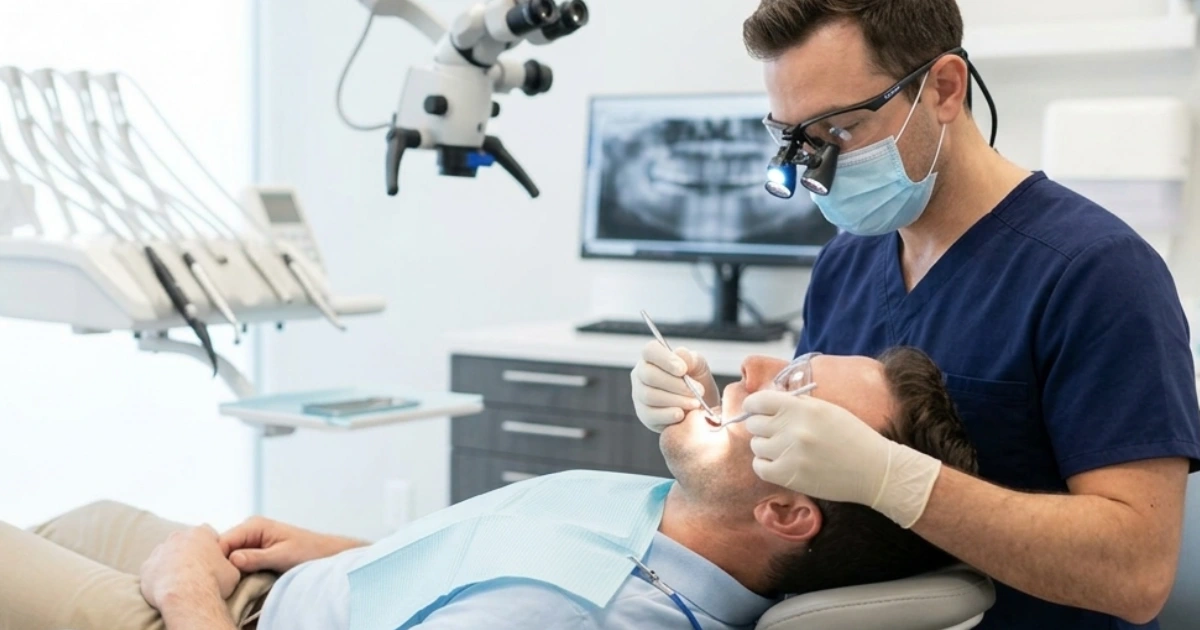
A cracked tooth diagnosis comes from testing, not guessing. Our endodontists use bite testing to identify which part of the tooth reproduces the pain, cold testing to assess pulp response, transillumination to shine light through the tooth, and dye to trace where a crack travels.
Many cracks don’t show up on a standard X-ray, so 3D imaging and surgical magnification do much of the work. The plan can also change once an old filling comes out and the crack becomes visible underneath. Honest expectation setting helps here: some cracks cannot be fully mapped until treatment is underway.
Common Questions About Cracked Teeth and Root Canals
Can a cracked tooth heal on its own?
No. Enamel does not regenerate, so a crack stays until it is treated.
Is a cracked tooth a dental emergency?
Treat it as one, especially with swelling, severe pain, or a visible fracture. Prompt evaluation protects your options.
Why does my cracked tooth only hurt when I let go of a bite?
Pain on release is a classic sign of a crack, because the segments shift apart and irritate the pulp.
Will I need a crown after a root canal on a cracked tooth?
In most cases, yes, since the crown protects the tooth from further splitting.
Getting a Clear Answer About Your Tooth
The crack type decides the treatment, not the symptom alone. A tooth that aches intensely may only need a crown, while a quiet tooth with a deep fracture may need a root canal. A diagnostic exam is what turns a guess into a plan, and it is the step that answers the cracked tooth vs root canal question for your specific tooth.
If a tooth has been bothering you when you chew, Our Team is here to take a closer look. Schedule a consultation with Endodontic Specialists by Solomon Dental to find out if your cracked tooth needs a root canal, and we will walk you through what we find.